Mustafa Mert Tunalı

I design and deploy end-to-end machine learning platforms — from data ingestion and model training to scalable inference and orchestration. My work bridges large language models, computer vision, and ML infrastructure, with a focus on building reliable, production-grade systems that transform research into impact.

Experienced in developing and optimizing models for document intelligence, image understanding, and generative applications. I focus on system efficiency, model quality, and deployment scalability across distributed environments.

Currently leading development of platforms that integrate Document Processing, Unstructured Data Understanding, and LLM-driven automation — enabling enterprises to process and reason over data at scale.

Email / Google Scholar / X / Github / LinkedIn

Building AI Platforms

At Multimodal, I architect and develop production-grade AI systems that transform how enterprises process and reason over data. My work focuses on building reliable, scalable platforms that bridge the gap between cutting-edge research and real-world impact.

AgentFlow
All-in-One Agentic AI Platform for Process Automation
Platform

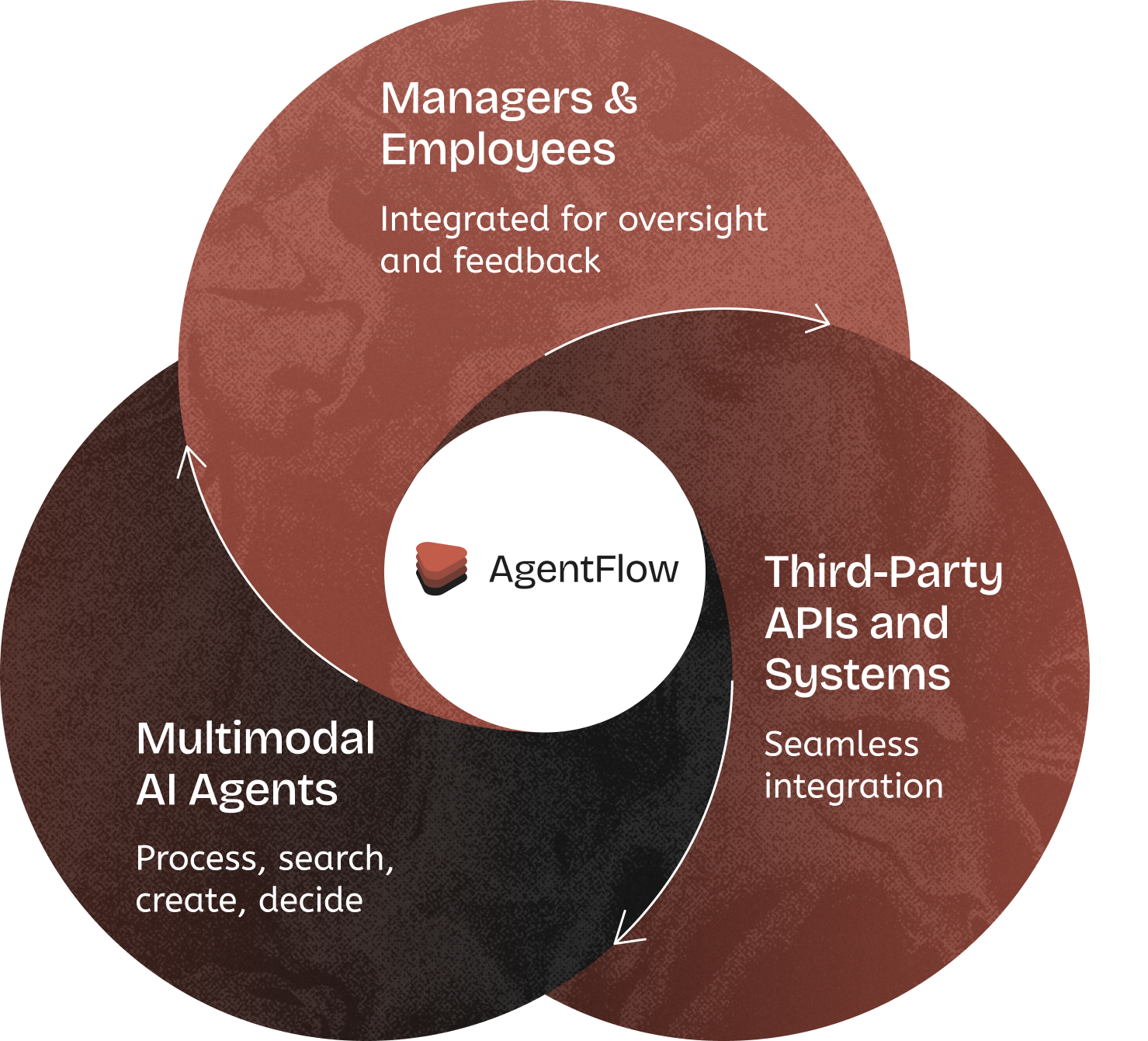
AgentFlow is an enterprise-grade multi-agent orchestration platform that I architected from the ground up. The platform enables organizations to build, deploy, and orchestrate autonomous AI agents across six specialized systems: Document AI for intelligent extraction, Unstructured AI for RAG pipelines, Decision AI for business logic automation, Database AI for enterprise search, Conversational AI for dialogue systems, and Report AI for content generation. Built on containerized microservices with automated CI/CD, achieving 99.99% uptime while serving multi-tenant workloads. The platform processes millions of documents monthly, orchestrating complex workflows that combine vision models, LLMs, and business rules into production-ready automation systems.

Instant
Natural Language Workflow Builder for Agentic AI
Blog Post

Instant is a breakthrough workflow builder that democratizes agentic AI development. I designed and developed this system to enable users to create sophisticated multi-agent workflows using natural language — no complex configuration required. The platform translates business requirements into fully orchestrated AI systems in minutes, automatically configuring document processing pipelines, decision trees, and data extraction schemas. With Instant 1.0 in production and 2.0 on the horizon, the system features real-time ingestion monitoring, confidence scoring, audit trails, and seamless integration with all AgentFlow agents. What traditionally took weeks of engineering effort now happens in minutes, enabling rapid prototyping and production deployment of AI-driven workflows at enterprise scale.

Education
MEF University
BSc in Computer Engineering
2020 - 2024

Analysis of Algorithms, Data Structures, Object Oriented Programming, Database Managment Systems, Linear Algebra, Calculus 1-2, Operating Systems, Computer Architecture, Computer Networks, Software Engineering, Discrete Mathematics, Probability and Statistics, Digital System Design.

Open Source Projects
go-chatgpt-grpc
Github

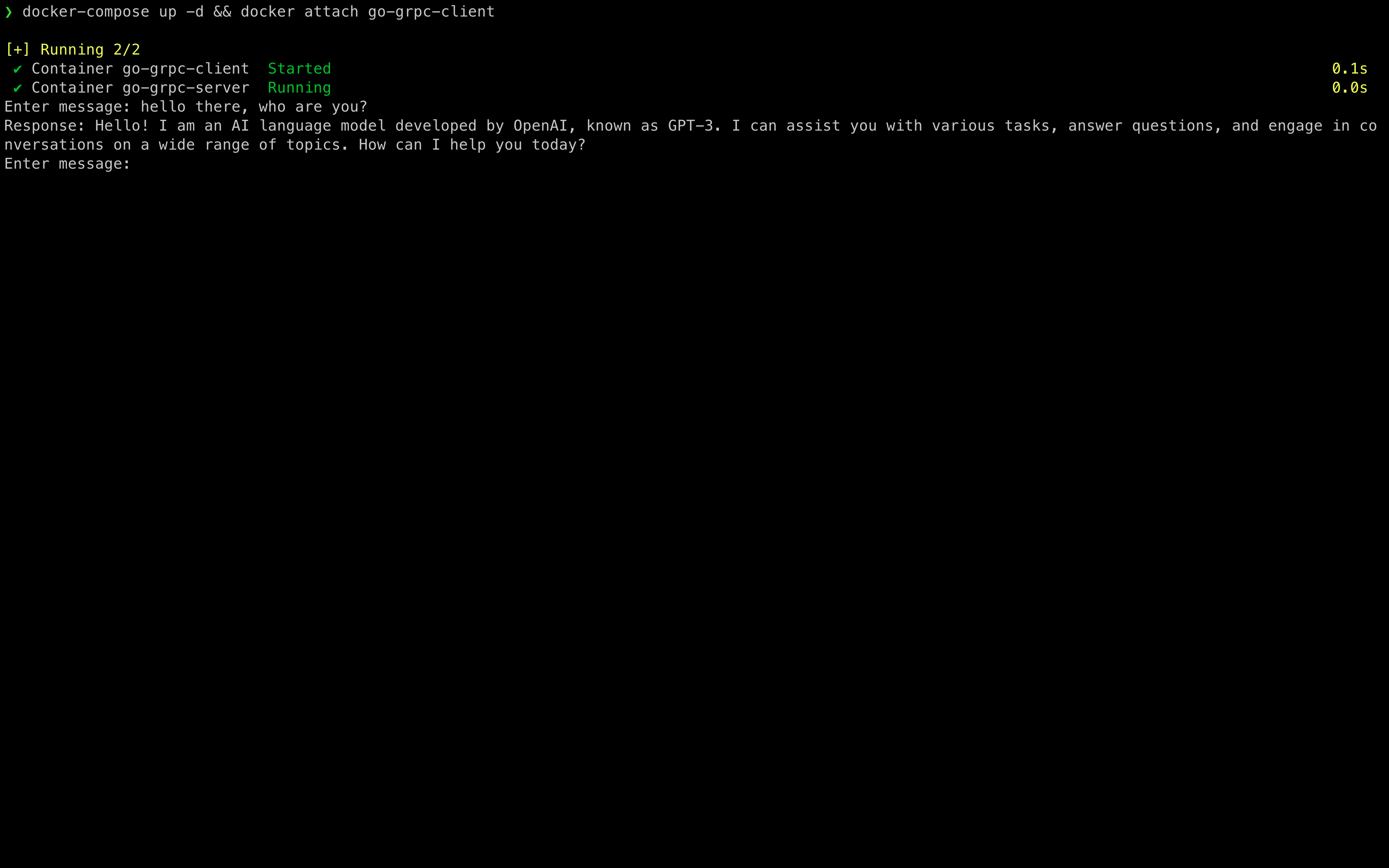
This project originated from the need to seamlessly use OpenAI's API with custom features on the server-side and effortlessly stream this data to the frontend. It was designed to incorporate aspects like prompt engineering and rule-based systems. I believe this tool, born out of practical necessity, can assist others in similar projects and scenarios.

Deep Learning Training GUI V1
Github

I aimed to make using pre-trained deep learning models simple and accessible through a user-friendly graphical interface, eliminating the need for additional coding and simplifying the setup process. Progress can be monitored in real-time using tools such as TensorBoard.

Research

I'm interested in machine learning infrastructure and bio-inspired AI models. Much of my research is about transforming deep learning models into efficient and scalable systems.

Enhancing Quality Control in Plastic Injection Production: Deep Learning-Based Detection and Classification of Defects
Publisher: IEEE
Conference: 2023 8th International Conference on Computer Science and Engineering (UBMK)

This study presents a deep learning-based approach for detecting and classifying defects in plastic injection molding production, improving quality control processes through automated visual inspection.

Steel Surface Defect Classification Via Deep Learning
Publisher: IEEE
Conference: 2022 7th International Conference on Computer Science and Engineering (UBMK)

This study aims to use deep learning to improve quality control in production lines by classifying steel surface defects using a limited data and computing power.

Beyond Code
Nürburgring Nordschleife

On the Nordschleife — where every lap is a lesson in precision

Outside of building AI systems, you'll find me on the track — specifically the Nürburgring Nordschleife, the infamous "Green Hell" where physics meets adrenaline. I'm drawn to sim racing and the challenge of perfecting every apex and braking point.

I read science fiction and dive into neuroscience papers when I can. The intersection of biological and artificial intelligence fascinates me — understanding how the brain processes information shapes how I think about building better models.

On AGI: I believe we're further away than the hype suggests. Reinforcement learning shows promise in specific domains, but it's not a silver bullet. We need fundamentally new approaches — perhaps inspired by neuroscience, perhaps something entirely different. The path forward requires rigorous research, not just scaling existing methods.

Website template from Jon Barron

Brain icons by Eucalyp - Flaticon

Last updated: October 19, 2025